
Summer 2026
Dear Friends and Fellow Good Trouble Makers,
In The R Word Summer 2026 blog post, we will share (1) our vision and mission, (2) a review of what we have done, (3) a preview of what we will do, (4) a fund update, and (5) a reflection.
Vision and Mission
The Zacchaeus Foundation is a non-profit named for Zacchaeus, who repented, repaired, and was healed.
We are working for racial healing in Northwest Arkansas (our vision).
We are repairing truth, wealth, and power (our mission).
We repair truth by educating white people and churches about reparations. We started events.
We repair wealth by raising funds from white people and churches for Black-led non-profits. We started The Zacchaeus Fund for Black-led non-profits.
We repair power by empowering Black people to decide who receives funds. Black board members decide who receives funds.
Review
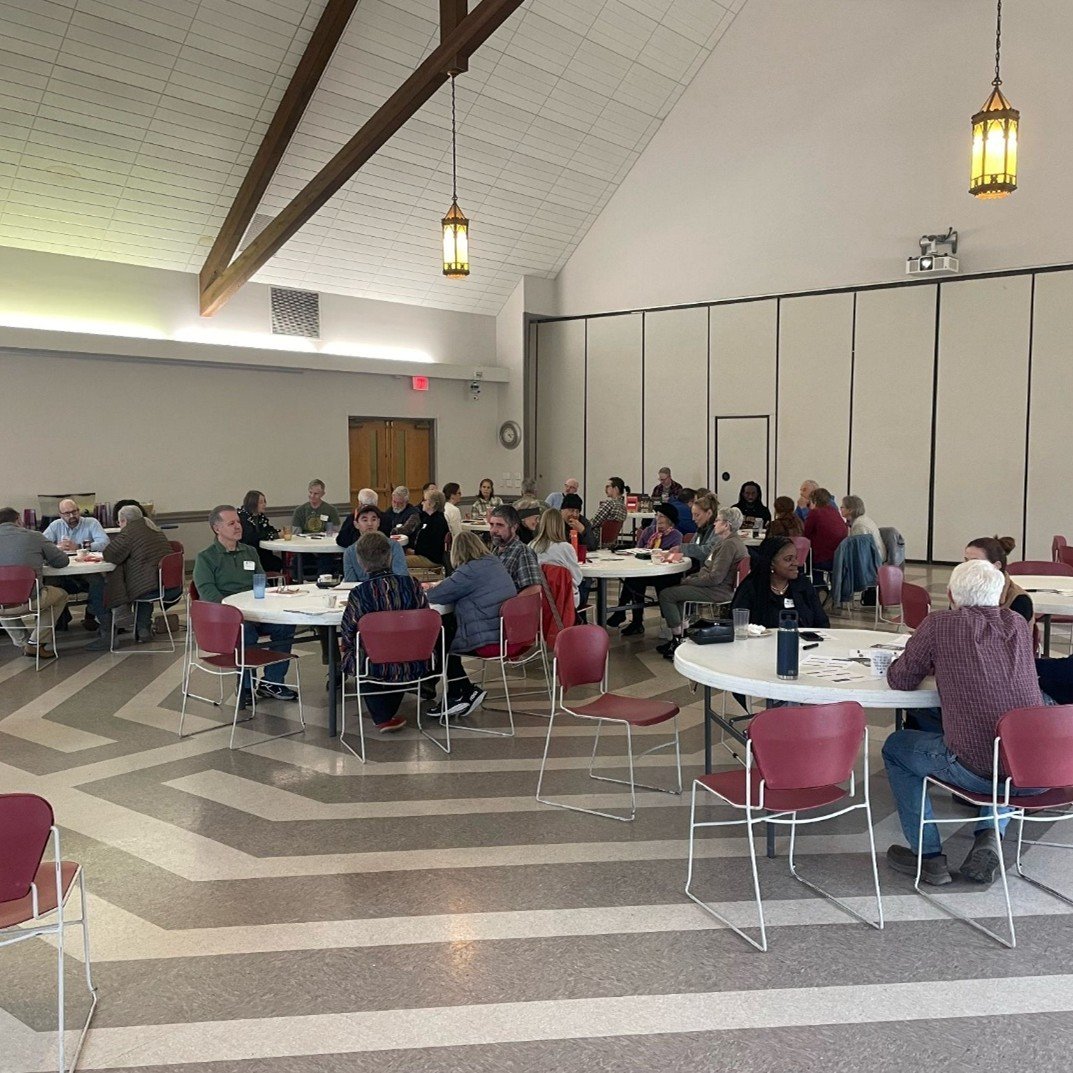
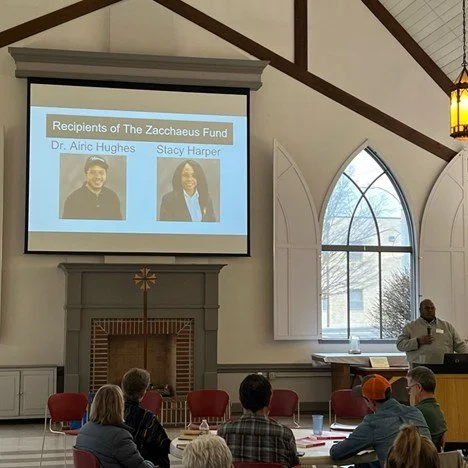
On Saturday March 7th, we discussed Reparations: A Christian Call for Repentance and Repair by Kwon and Thompson and announced two Black-led non-profits who each received $25,000 from The Zacchaeus Fund in 2026. Dr. Airic Hughes of The Visionari Foundation and Stacy Harper of Light House Solutions each accepted $25,000 from The Zacchaeus Fund and agreed to be on The Zacchaeus Foundation board.
Preview
On Saturday July 11th, from 3 to 5pm at St. Paul’s Church, we will view The Big Payback, a film about reparations featuring Robin Rue Simmons. RSVP here.
The Zacchaeus Fund Update
The Zacchaeus Fund for Black-led non-profits is a donor advised fund held by Arkansas Community Foundation. The advisors of The Zacchaeus Fund are the Black board members of The Zacchaeus Foundation.
Our 2026 goal is to raise $110,000, which will enable us to invest $50,000 in Black-led non-profits in 2027.
Our 2035 goal is to raise an endowment of $1.4M, which will enable us to invest $50,000 in Black-led non-profits annually, perpetually.
Year to date, we have raised $45,000 (40% of our 2026 goal).
To help us raise $110,000 in 2026, invest in The Zacchaeus Fund here. To join our fundraising team (people who invest and invite others to invest), email us at info@thezacchaeusfoundation.org
Reflection
Betty Wilton is a board member of The Zacchaeus Foundation. Read Betty’s reflection below.
As we move into the days after Easter, the thought of repair has been heavy on my mind. I mean the whole message of Easter is repair, but how does Easter help us understand the work of reparations? For so long the Easter message has been focused solely on the repair for our hearts as individuals. The focus is predominately on our individual sins and internal struggles to see ourselves as God sees us. That is absolutely a part of the work of the cross and is an essential part of the resurrection. However, we have so often been led to believe that that is all the cross has to offer. This is where we, as the white Church especially, have been lacking. The book Reparations by Duke Kwon and Greg Thompson admonishes us to see how repair is an essential part of what it means to follow Jesus’ example today. The heart and soul of Easter is holistic repair. From the very beginning of the birth of Jesus, God shone a light on the inequities in the world around him. Then God submitted godself to the extremely vulnerable experience of being human. God, through the life of Jesus, revealed such a tender understanding of the sociopolitical inequities of his day. He called his followers repeatedly to look towards those that the community despised. Repair is meant to go beyond our own individual relationships with God. To be Easter people means to be people of repair.
We are able to better understand our role in reparations by looking at the restorative love shown by Jesus in his death and resurrection. As Kwon and Thompson write, “the call to restorative love is nothing less than a call to risk-assuming, reckless, self-renouncing sacrifice on behalf of our plundered neighbors”. If we are to truly follow in Jesus’ footsteps, we must look at our own histories and see the ways that White Supremacy has kept us from truly seeing our black neighbors. We have to face the truth of the Church’s failure to be who God has called us to be, and our role as perpetrators, accomplices, and silent bystanders. Kwon and Thompson admonish us, writing, “The Church’s past faithfulness fuels us with hope concerning the possibility of the Church in its work of repair. And the Church’s past failures fuel us with repentance concerning the culpability of the Church and demand that we engage in the work of repair.” To be Easter people means taking on the inescapable sense of disorientation and enduring grief that our roles in White Supremacy cause, and then, like Jesus, tangibly repair the inequities that are present between us and our neighbors– sparing no expense.
So, as we move from the season of Easter into the season of Pentecost, the questions that I suggest we reflect on are: How is the spirit moving me to be in relationship with those I do not know and/or like? What would it look like realistically to put myself in an uncomfortable position just for the sake of people who have different skin than me, to be treated equitably? What parts of my history and the Church’s history is the Spirit moving me to confront and repent of?
Let’s move into this season of Pentecost as Easter people, people who are committed to restorative love. Let’s follow Jesus together by committing to be people of holistic repair. May we let the Spirit shine a light on our histories and guide us through the disorientation into reconciling relationships with our plundered neighbors. May the Spirit embolden us as we journey together.
Thanks for reading The R Word!
With hope for healing,
Lowell Taylor
Board Member, The Zacchaeus Foundation
info@thezacchaeusfoundation.org